
U.S. Marshals Hancock Custody
U.S. Marshals custody is a federal function, not a named detention facility in Hancock County. Federal detainees may be housed in local, regional, or contract jails while awaiting a hearing, transport, judgment, or BOP designation. The location can change without altering the federal legal custodian. That structure is why a county roster absence and a BOP no-result can both occur while the person remains confined.
No Hancock-specific public Marshals detainee search was found. The correct path begins with the federal case and any known holding jail. If the Hancock jail record names the U.S. Marshals Service as the destination, treat the exit as a transfer. Ask for the actual departure time and receiving authority, then use the federal court docket to identify the detention or release order.
| Federal stage | Likely record source |
|---|---|
| Arrest and initial appearance | Federal docket and detention filings |
| Pretrial detention | Marshals routing plus the holding jail |
| Release pending case | Federal court release order and facility exit |
| Sentence and designation | Judgment followed by BOP locator |
| Post-prison supervision | Judgment, docket, and U.S. Probation |
Confirm a Marshals Hancock Release
There is no one-screen name search for this custody type. Start with the case number, federal court, full legal name, and approximate arrest date. The Eastern District of Tennessee is the relevant district for Hancock County, but a prosecution can proceed elsewhere based on venue. Do not assume the court from residence alone.
- Ask Hancock County Jail whether a local booking ended in a U.S. Marshals transfer and request the destination field.
- Search PACER in the correct federal court for the detention, bond, release, or judgment entries.
- Identify the known holding jail from the docket, counsel, court contact, or agency routing information.
- After a prison sentence and BOP designation, switch to the BOP Inmate Locator.
- Pair any court release order with facility confirmation of the actual physical exit.
The federal court record shows legal authority. The holding jail records physical presence and departure. The Marshals Service manages transport and custody routing. Each source has a limited role, and none alone should be stretched beyond it.
Marshals Hancock Federal Court Records
PACER is the official nationwide service for federal court dockets and filed documents. A relevant docket may contain the complaint or indictment, initial-appearance record, detention hearing, release order, bond terms, plea, judgment, sentence, and supervised-release action. Search the correct court and case. PACER is not a live jail roster and does not itself report the exact time a person walked out of a facility.
The manifest's PACER capture supports the court-record route for U.S. Marshals custody.

The service can explain whether a judge ordered detention or release. Confirm the physical event with the contract jail or agency that carried out the order.
Federal supervised release may appear in the judgment after imprisonment. It is community supervision administered under the federal court system, not Tennessee parole. A revocation proceeding can return the person to custody. Read the current docket rather than assuming the original release terms remained unchanged.
Hancock Court Search Limits
Tennessee's Public Case History is an appellate state-court system. It covers the Tennessee Supreme Court, Court of Appeals, and Court of Criminal Appeals within its stated date scope. It is not PACER and it is not a federal detainee locator. It also does not provide a complete Hancock County trial-level criminal search.
The manifest capture comes from the official Public Case History explanation.
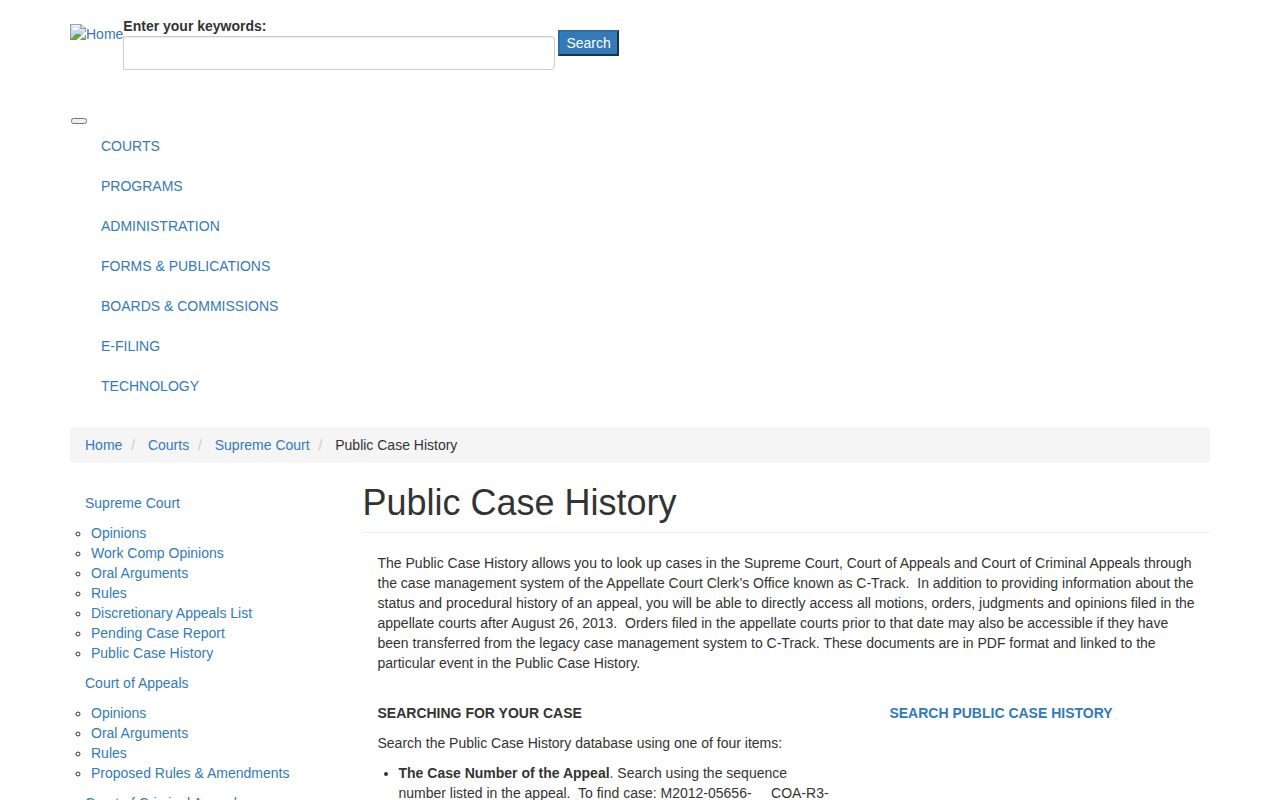
The source helps separate Tennessee appellate records from the federal docket needed for U.S. Marshals detention and release orders.
A Hancock state case can still explain an arrest or local hold, but it does not substitute for the federal case. Ask the Hancock Circuit Court Clerk for the local docket when both systems appear. Then keep the state and federal case numbers separate.
Marshals Hancock Holding Jail Records
A contract holding jail is often the best source for actual admission and exit times. Once the location is known, ask that facility for the booking or housing entry, U.S. Marshals authority, departure date and time, release versus transfer designation, and destination. A federal court order may authorize release, but processing and another detainer can affect the physical result.
If Hancock County Jail was the first location, request its local release entry from the Sheriff's Office at 265 New Jail Street. The record should state whether the person entered the community or was delivered to federal custody. If another jail later housed the person, that receiving facility holds a separate physical-custody record. Build the timeline one custodian at a time.
| Record item | Question answered |
|---|---|
| Hancock departure entry | When did the local booking end, and to whom? |
| Federal detention order | What custody did the court authorize? |
| Contract jail record | Where and when was the person physically held? |
| BOP designation | Did sentenced federal prison custody begin? |
Note: Contract custody can change locations, so an old jail answer should be tied to a date rather than treated as current indefinitely.
Marshals Hancock Contact Route
No county-specific public U.S. Marshals detention office or locator was documented in the research. Use the appropriate federal district office identified from the case, the clerk of the federal court, counsel, and the known holding facility. Public staff may not disclose operational transport details or private case information. Ask narrowly whether the person remains in the agency's custody path and which public record or facility can confirm status.
No county-specific public detainee locator
No Marshals detention facility verified in Hancock County
Use the federal case, district office, and known holding jail
Use BOP only after federal prison designation
When the federal court is unknown, begin with the case facts rather than calling unrelated offices. A federal docket number, arresting agency, court date, or attorney can identify the right district. The phrase “federal hold” alone may not say whether the matter belongs to the Marshals Service, BOP, ICE, or another agency.
- Pretrial detention
- Custody before the federal charge reaches judgment.
- Contract custody
- Federal detention carried out in a non-BOP facility under an agreement.
- Designation
- BOP's placement of a sentenced person into the federal prison system.
- Supervised release
- Federal court supervision after a term of imprisonment.
Hancock Records Before Federal Transfer
The Hancock Clerk and Master handles chancery and probate matters, not the default criminal-release record. Its TnCIS link should not be mistaken for a complete federal or local criminal locator. The Hancock Circuit Court Clerk is the more useful local source for a criminal case, judgment, bond order, warrant, or probation entry that preceded a federal handoff.
The manifest includes the official Hancock Clerk and Master page to document that local scope.

The page helps prevent a chancery or probate search tool from being presented as a federal custody search. Match the record request to the court that owns the case.
From Marshals to BOP Custody
After conviction and sentencing, the Marshals Service may transport the person for BOP designation. At that stage, the Federal Bureau of Prisons release search becomes the proper public prison route. Search by BOP Register number when possible. A BOP result may show the institution or a released status and date.
Before designation, the lack of a BOP record is expected in some cases. After release from BOP, the federal judgment may still impose supervised release. If an immigration or state detainer follows, the person can move directly into another custody system. Record the destination at every step.
Verify a Marshals Hancock Exit
The best proof combines the federal court order with the physical-custody record. An order shows the legal decision. The holding jail or responsible agency shows whether and when it was carried out. If the exit was a transfer, the receiving system completes the chain. If it was release into the community, the judgment explains any bond terms or supervised release that remain.
The Hancock County release search path can help when the first record does not reveal whether the matter is county, state, federal prison, immigration, or Marshals custody. Never infer freedom from disappearance alone.